Websites for contractors and builders
Read by tender teams. Built to get you shortlisted. Construction company website design for contractors and builders
Marketlube plans, designs and builds construction company websites for main contractors and fit-out firms in Saudi Arabia, the UAE, Qatar and Oman, and home builders in Kerala. The team sits in Calicut and answers in Gulf working hours; there is no Marketlube office in the Gulf. A contractor's site from us is built around what a procurement team checks before it invites a bid: registration and classification, project sheets, safety practice, a prequalification pack and open roles. A builder's site leads with each project's stage, its plans and its K-RERA details. In Calicut we designed and built the Luxart Builders website and Hiline Developers' first website.

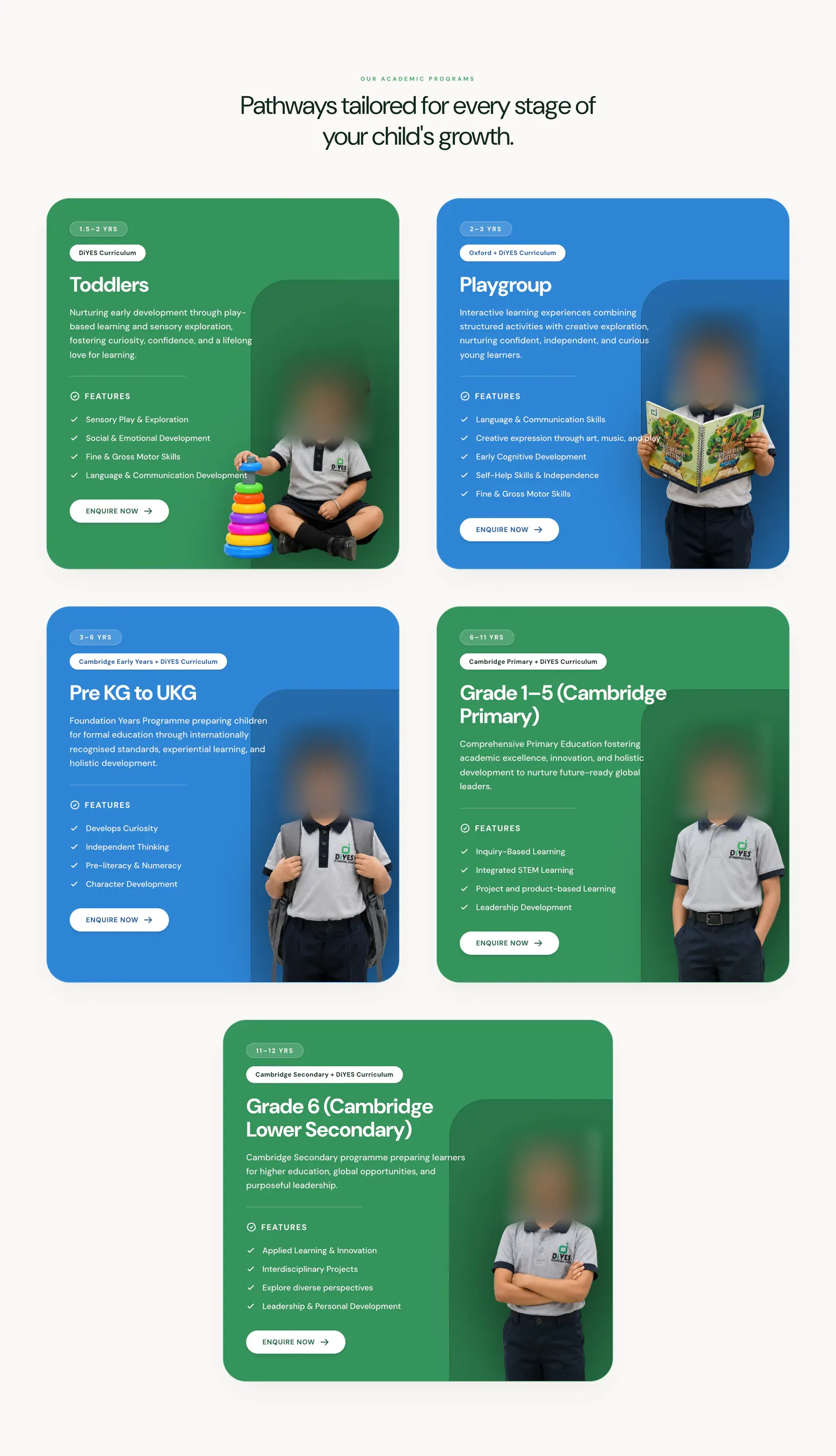
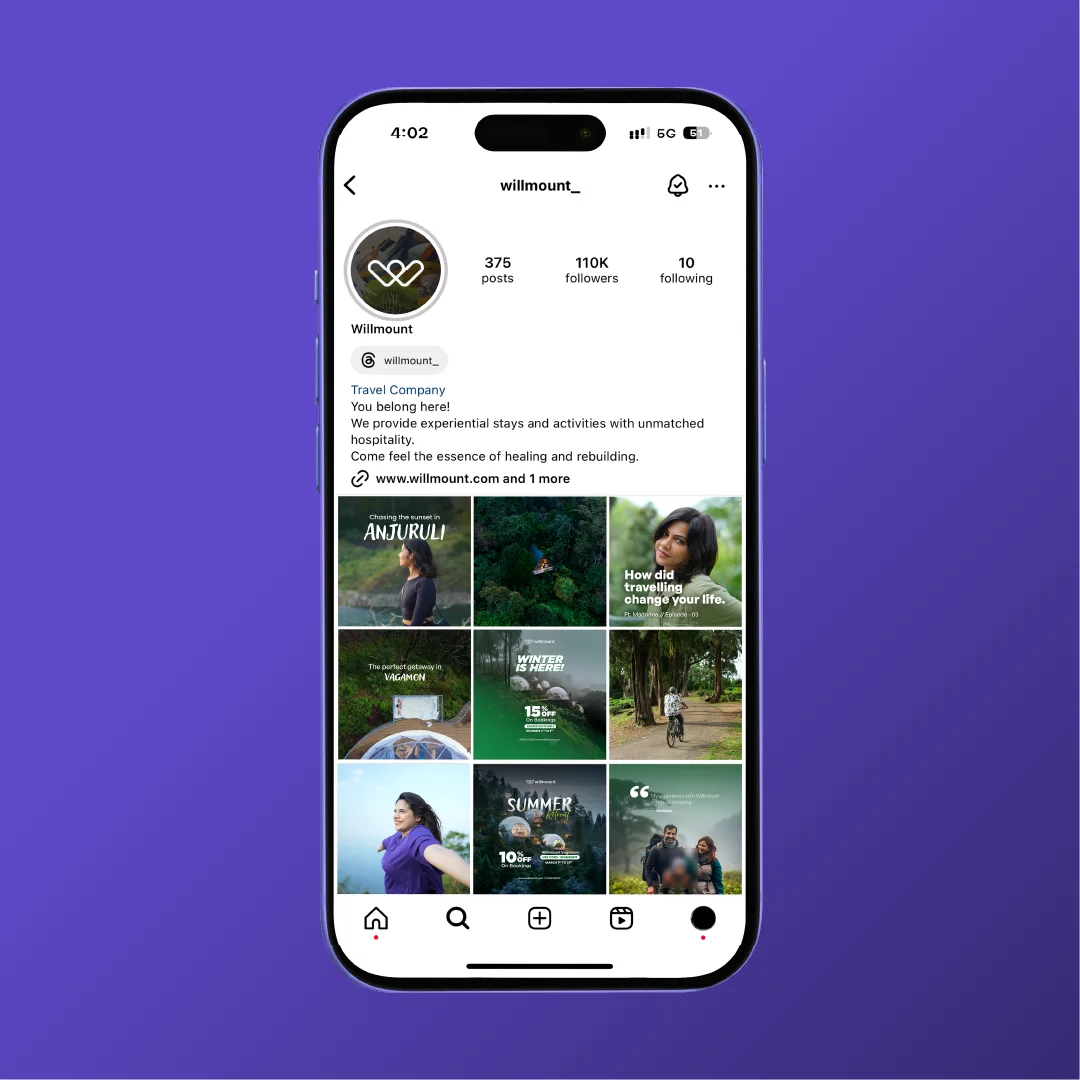
Luxart Builders · website we designed and built

Hiline Developers · website we designed and built
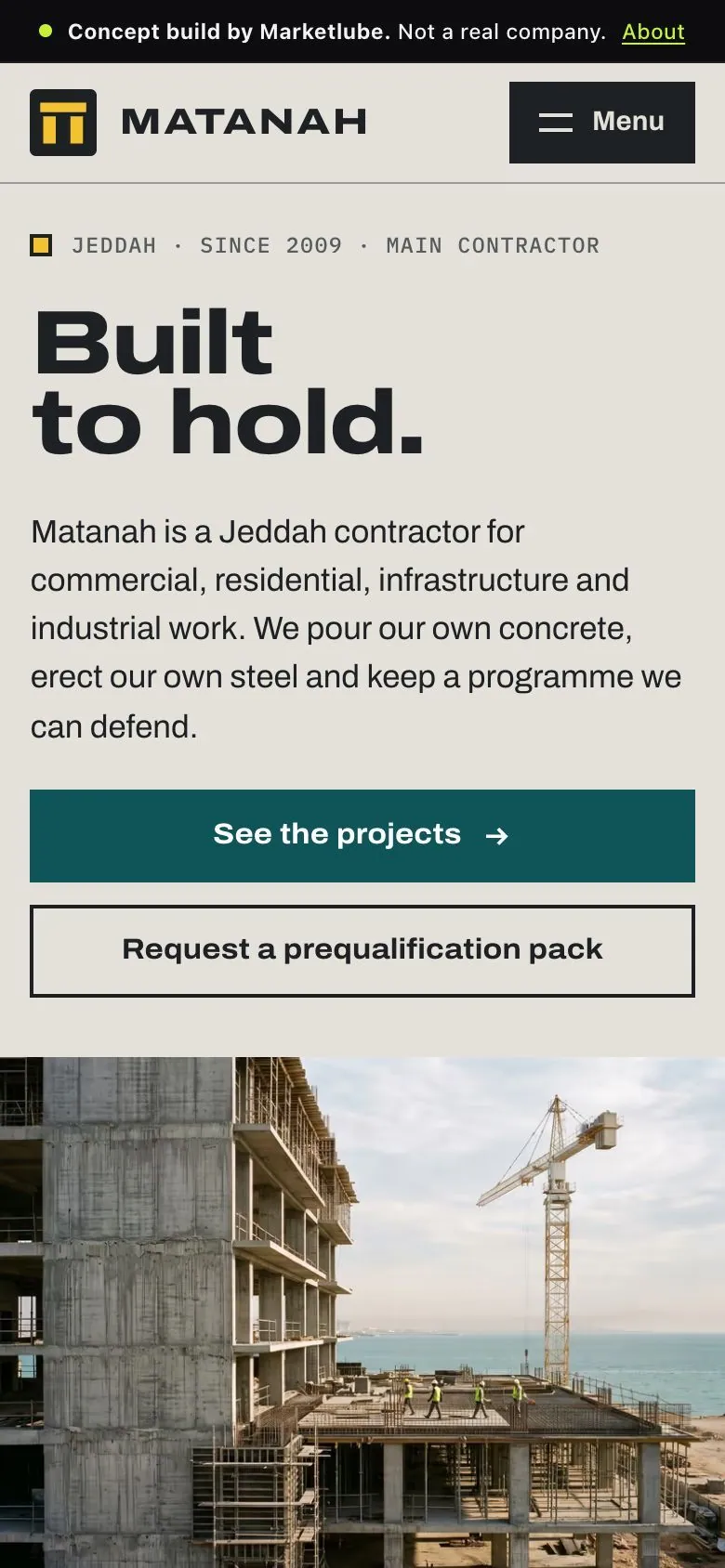
Concept build · Matanah on a phone
Two websites we built for clients
Contractor websites are read with a scoring sheet open.
A contractor's website is read by the people who decide whether it gets on a tender list: a developer's procurement team, a consultant or a public tender committee. They want the issuing body, the grade, the expiry date and three projects like theirs, with the size, the scope and the programme. If the site cannot answer those, the phone does not ring.
So we plan a contractor's site from the documents its last tenders asked for, not from a homepage template. Projects become sheets with fields a tender team can filter. Credentials become dated facts that one edit updates across the site. The prequalification pack is split into what anyone may download and what is sent only after a request. Careers get a section of their own, because engineers check a contractor's website before they apply.
Kerala home builders sell to a different reader, a family making the biggest purchase of its life, often from Dubai, Doha or Riyadh. Their sites lead with each project's build stage, plans with room sizes and the registration details K-RERA asks for. We have built for that reader: the Luxart Builders site in Calicut is ours, and so was Hiline Developers' first website. Our Gulf contractor samples are concept builds, working homepages for fictional firms, and are labelled that way. This page is not legal advice; your lawyer confirms how each rule below applies to you.
What a construction company website has to prove.
Credentials a tender team can check with the issuer
In Saudi Arabia the classification certificate is issued electronically and project owners verify it on the Ministry's website, and it is valid for two Gregorian years, so a stale line is easy to spot.
What we build: A credentials panel fed by one content field per certificate, showing the issuing body, the field, the grade and the expiry date in plain text, on the home page, the About page and every download that repeats them.
What you get (4)Show less
- Issuer, field, grade and expiry date as text, never a badge image
- One edit that updates every page and PDF cover showing the certificate
- A reminder to your team before a certificate expires
- Labelled slots for grades you are applying for, kept apart from grades you hold
Source: Qanoniah, Implementing Regulation of the Contractor Classification Law (Saudi Arabia), read 28 Oct 2026
Projects a buyer can compare with their own
What we build: A project index with sector filters and a sheet for each job: sector, client type, your role (main contractor, subcontractor, design and build or joint venture), scope, size in the units the reader uses, a contract value band where your contract allows one, planned and actual programme, and the city and district.
What you get (4)Show less
- Sector chips that narrow the list to work like the reader's
- A sheet per project in the order a prequalification form asks
- A permission flag, so a client is named only where they agreed
- Value bands instead of exact figures for confidential contracts
A prequalification pack without a week of emails
What we build: A document request where the reader ticks what their tender needs. Public items, such as the company profile, certificates and HSE and quality policies, download at once; audited accounts, bank references and full reference letters go to your team to approve and send, under NDA where you require it.
What you get (4)Show less
- A public and an on-request list, set by you
- A live count of the documents ticked
- Each request routed to the person who approves it, with who asked and for which tender
- Every PDF dated on its cover and swapped when a certificate renews
Hiring site staff without breaking data law
In Saudi Arabia the Personal Data Protection Law has been enforceable since 14 September 2024, and SDAIA's guideline lists what a privacy policy must say, including the data collected, where it is stored, how long it is kept and the person's rights.
What we build: A careers section with open roles by site or yard and what each job involves, and a CV form kept apart from the tender enquiry.
What you get (4)Show less
- Roles that open an application with the role already chosen
- A consent box that is never pre-ticked, beside a linked privacy notice
- CVs sent to a restricted inbox, not the sales one
- A stated retention period your team can act on
Source: CMS, New SDAIA rules and guidelines as KSA's personal data protection framework is now enforceable, read 28 Oct 2026
Arabic for the people who sign the contract
What we build: A full right-to-left Arabic version of the pages buyers read: home, about, credentials, projects, HSE and the prequalification request. The construction terms come from a native Arabic writer who knows what Gulf engineers call things, and filters, timelines and project sheets mirror properly instead of swapping text.
What you get (4)Show less
- Separate Arabic addresses linked to the English pages with hreflang
- Mirrored layouts for the project index and delivery timeline
- An Arabic writer scoped with you before we quote
- Arabic PDFs in the pack where your tenders ask for them
Safety practice a consultant can score
What we build: An HSE and quality section written as practice, not slogans: the policies, the certifications you hold, how toolbox talks run and in which languages, how summer working hours and night pours are planned, and the hold points that protect quality. Figures such as lost-time rates appear only where you can stand behind them.
What you get (3)Show less
- Policies and certificates linked to the pack
- Site routines written in a form a consultant can paste into a scoring sheet
- Labelled slots instead of invented safety statistics
K-RERA details on every Kerala project page
What we build: For builders selling registered projects in Kerala, each project page carries the K-RERA registration number, the K-RERA website address and the project's QR code, which K-RERA has required beside the number and address since 1 September 2023, legible and scannable. The same fields feed brochures and landing pages, so no page goes live without them.
What you get (4)Show less
- A registration block on each project page, near the price and handover date
- The QR code from the promoter's K-RERA dashboard, sized to scan on a phone
- A build stage bar and handover date on every project card
- Slots for the occupancy certificate once it is issued
Source: Constro Facilitator, Kerala RERA makes QR code mandatory for real estate projects from Sep 1, read 28 Oct 2026
Families following a build from the Gulf
What we build: An NRI section for Kerala builders whose buyers live in Dubai, Doha or Riyadh: stage photographs, video walkthroughs, call hours in Gulf time, payments tied to finished stages and a site visit form with a video call option and a phone field that takes a country code.
What you get (4)Show less
- A stage gallery per project that your site team can update from a phone
- Floor plans with room sizes in feet and metres
- Enquiries that open WhatsApp with the project already named
- A plain explanation of how power of attorney and NRE or NRO payments are handled, written with your lawyer
Four construction sites you can open, all concept builds.
Matanah, Qirmiz, Hasik Engineering and Contracting and Mukhappu Homes are concept builds: working homepages we designed and built for fictional brands, so you can try the layouts and their tools on your phone before we build yours. None of them is a client. See every concept build.
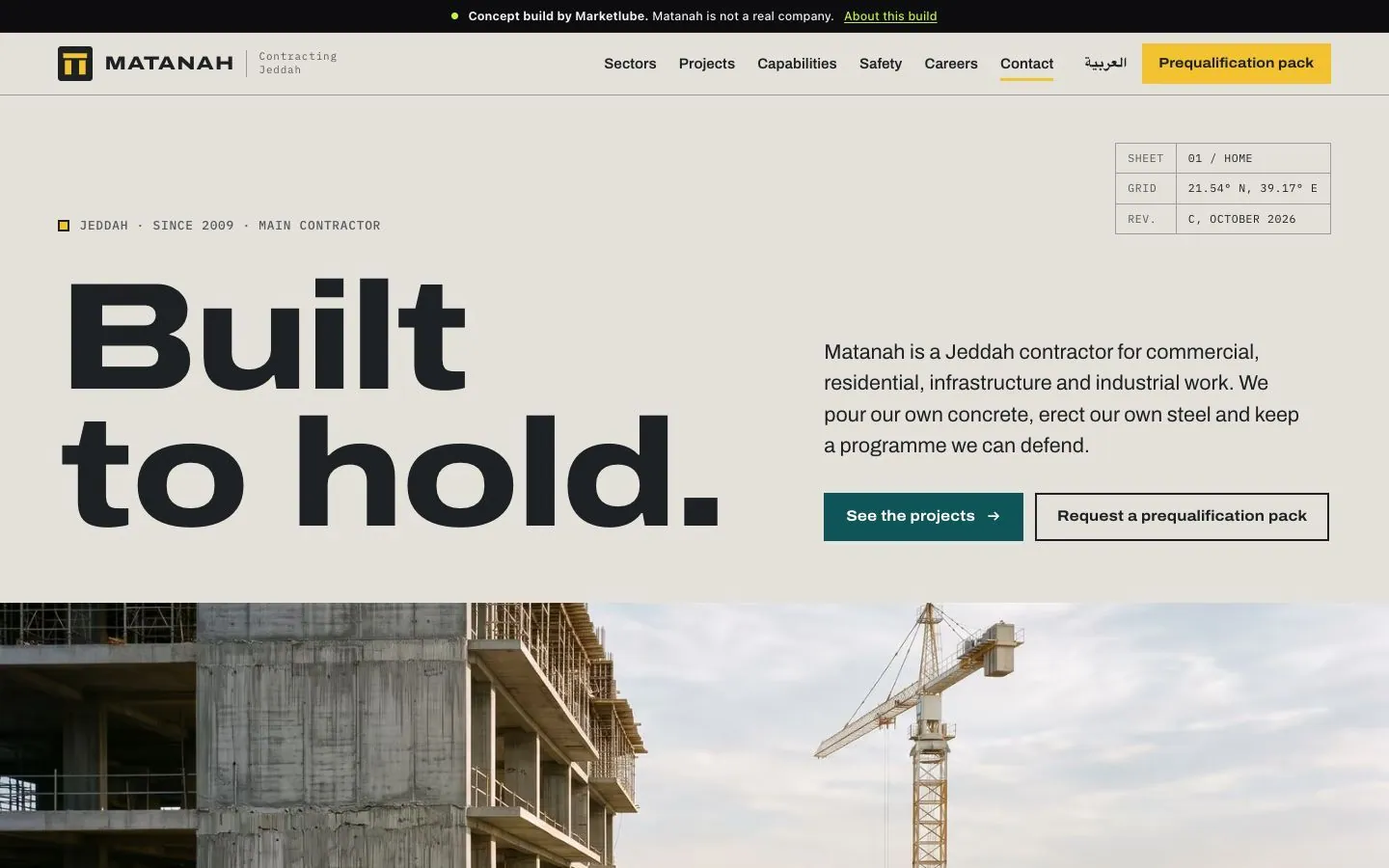
Concept build · Construction · Jeddah
Matanah

Concept build · Fit-out and contracting · Doha
Qirmiz
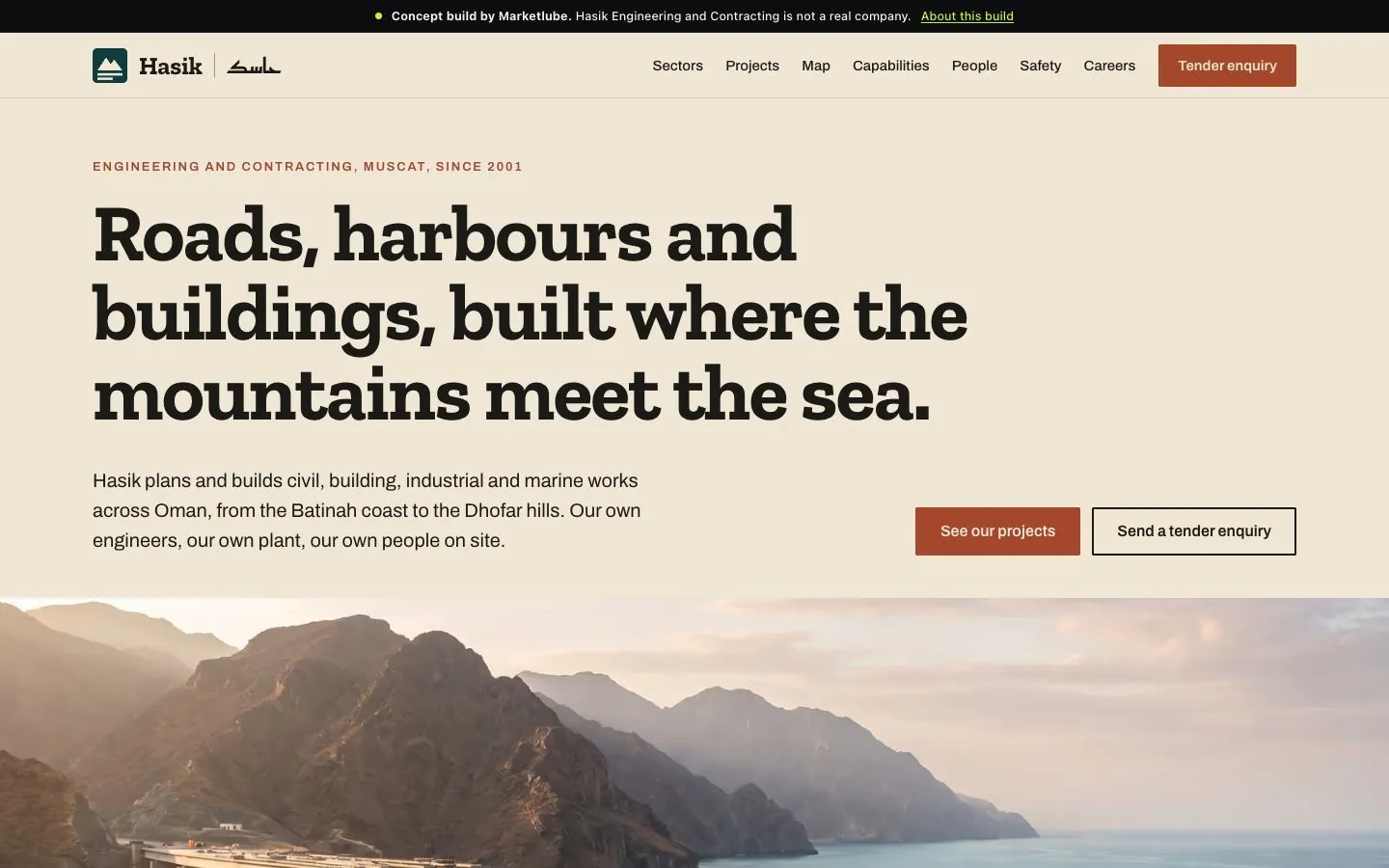
Concept build · Construction · Muscat
Hasik Engineering and Contracting
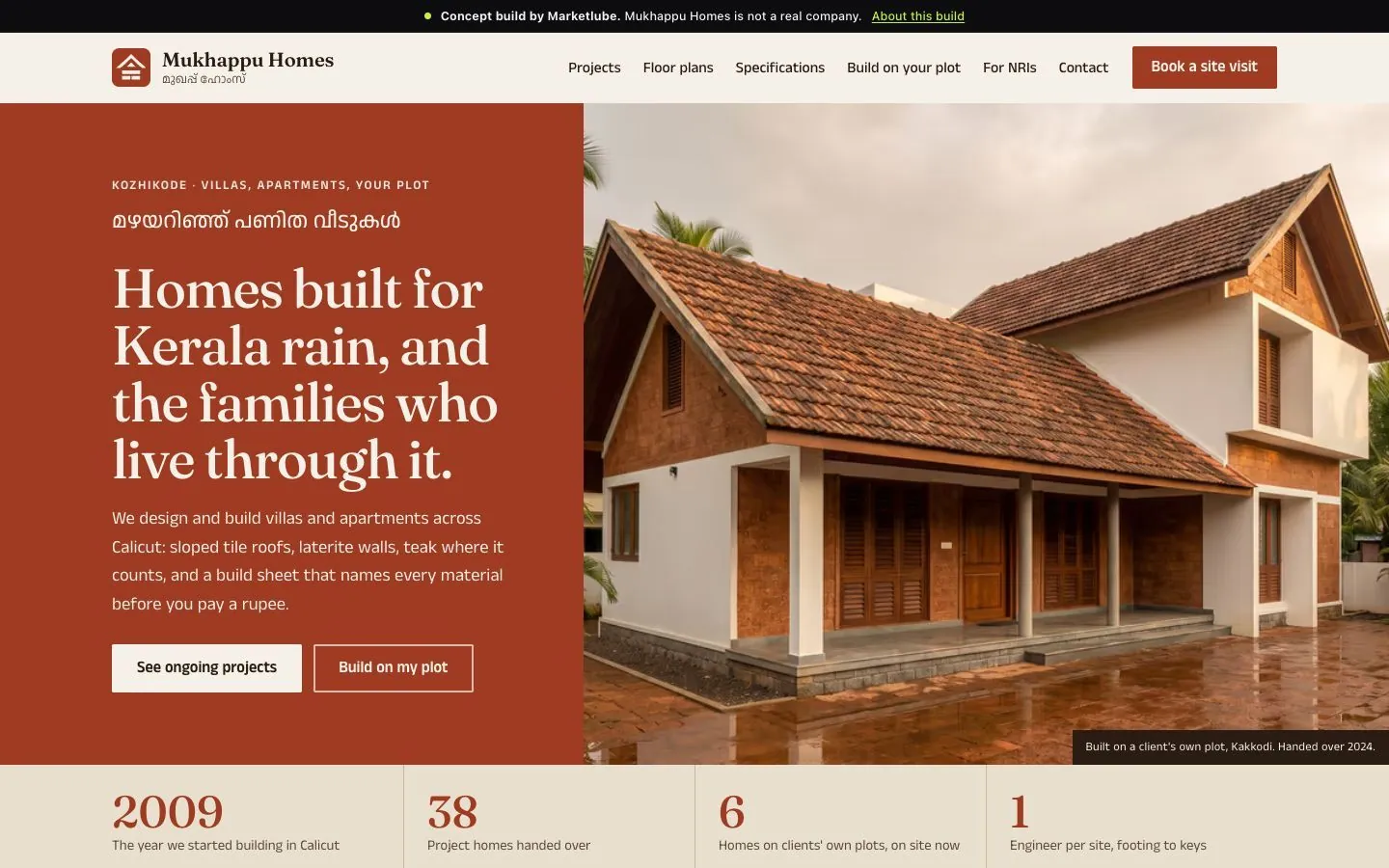
Concept build · Home builder · Calicut
Mukhappu Homes
Builder websites we built in Calicut
Luxart Builders
Luxart Builders builds premium homes in Calicut, and every home is designed by one of its empanelled architects. We designed and built luxartbuilders.com to show that model: each project sits under its architect, and an enquiry reaches Luxart on WhatsApp in one tap. Live since July 2025.
Hiline Developers
Hiline Developers is a construction company in Kozhikode that builds homes and villas for families across Kerala. We designed and built Hiline's first website, live by December 2024, which showed those homes as a gallery of rounded project cards, with a property management section for owners. Hiline has since moved to a new website built by another team.
Eleven pages a tender team and a buyer will open.
- HomeThe sectors you work in, your credentials with their expiry dates, three recent projects and the two next steps that matter: request the prequalification pack or ask for a site visit.
- About and credentialsWho owns and runs the company, the trades you self-perform, and every registration and classification as a dated line with its issuer, so a reader can check it.
- SectorsCommercial, residential, infrastructure, industrial, marine or fit-out, each with what you do in it and a link straight to the filtered project list.
- Projects indexEvery project you are allowed to show, filterable by sector, client type and role, with a count of what is showing and a map where your work is spread across a country.
- Project sheetOne page per project with the tender fields in order: scope, size, value band, planned and actual programme, location, photographs and, for fit-out, a before and after view from the same spot.
- Capabilities and plantWhat your own crews do, and the plant you own by type, earthmoving, lifting, paving or marine, with where it is kept, so a client knows what you would hire in.
- HSE and qualityPolicies, certifications, toolbox talks, summer working practice and quality hold points, linked to the documents in the pack.
- Prequalification packThe public downloads and the request form for everything else, with each document dated and the request routed to the person who approves it.
- CareersOpen roles by site or yard, a graduate or technician programme if you run one, and a CV form with its own privacy notice, separate from client enquiries.
- Contact and tender enquiryA form that asks what the request is about, a new project, a tender, supply or a site visit, plus sector, location and expected start, so it reaches the right desk.
- For home builders: ongoing projects and plansIn place of the tender pages, a Kerala builder's site carries projects by stage, floor plans with room sizes, a build specification, the K-RERA block and an NRI page for buyers in the Gulf.
Where the rules change the build.
Saudi Arabia
Classification decides who may bid, and the 2025 Implementing Regulation says project owners verify a contractor's certificate on the Ministry's website. Article 7 counts previous projects from a single contract value of SAR 500,000 for government work and SAR 5 million for private work, so project sheets that show a value band in riyals and the client type help a reader see which jobs count. Our Matanah concept build, a contractor website for a fictional Jeddah firm, shows a filterable project index and a prequalification pack in English and Arabic.
Source: Qanoniah, Implementing Regulation of the Contractor Classification Law, read 28 Oct 2026
Dubai and the UAE
Dubai's Law No. 7 of 2025 regulating contracting activities took effect in January 2026. Fenwick Elliott's review says Dubai Municipality keeps a unified register of contractors working in the emirate, free zones and the DIFC included; Mayer Brown's note for employers says they may not engage contractors who fail its registration and classification requirements, and that contractors have one year to meet them, which Neo Legal's July 2026 note dates to 8 January 2027. Once a Dubai contractor is registered and classified, its site should state both as dated facts, because employers now have a reason to check.
Source: Fenwick Elliott, Industry update: regulating contractor activities in Dubai, read 28 Oct 2026
Qatar and Oman
Public work runs through formal portals. Ashghal, Qatar's Public Works Authority, keeps a pre-qualifications and expressions of interest section with open, closed and archived listings, and in Oman the Tender Board reported 3,056 tenders worth more than RO 584 million issued through the Esnad e-tendering system in the first quarter of 2024. A site that mirrors the documents those portals ask for shortens the paperwork. Our Qirmiz concept build, a fit-out contractor website for a fictional Doha firm, and our Hasik concept build, a contractor website for a fictional Muscat firm with a project map of Oman, show the two kinds of site.
Source: Ashghal, Tenders: pre-qualifications and expressions of interest, read 28 Oct 2026
Kerala
Kerala builders selling registered projects must show the K-RERA registration number and website address in their advertising, and since 1 September 2023 the project's QR code beside them, so a project page carries all three. Enquiry and site visit forms collect personal data under India's Digital Personal Data Protection Act; its Rules were notified on 13 November 2025 and the main notice and consent duties apply from 13 May 2027, so a site visit form we build today names its purpose beside the phone field instead of waiting for 2027. The Luxart Builders site in Calicut is our real work here, and our Mukhappu Homes concept build shows a fictional Calicut builder's site with stage bars and floor plans.
Source: AZB & Partners, India's Digital Personal Data Protection framework comes into effect, read 28 Oct 2026
Starting prices for a contractor or a home builder.
- Business websiteCustom design, up to 8 pages · 4 to 8 weeksfrom INR 60,000 · AED, QAR or SAR 8,000 · KWD 650 · OMR or BHD 800
- Next.js website with a CMSHeadless CMS, up to 15 pages · 8 to 14 weeksfrom INR 2,00,000 · AED, QAR or SAR 15,000 · KWD 1,250 · OMR 1,550 · BHD 1,500
- Website care planBilled yearly · starts within a weekfrom INR 3,000 · AED, QAR or SAR 500 · KWD 40 · OMR or BHD 50 a month
Starting figures, before GST in India and before VAT where it applies in the Gulf. A contractor with a project index, a prequalification pack and Arabic pages usually suits the CMS build, because sheets and certificates keep changing; the written quote lists the Arabic writer, the document request routing, the careers form and the number of project sheets we load at launch.
What the build includes
- A content plan built from your last three prequalification forms
- Project sheets for your first set of projects, loaded with the fields tender teams ask for
- A credentials panel with issuer, grade and expiry, edited in one place
- The prequalification request with public downloads and approval routing
- A careers section and CV form kept apart from client enquiries
- Privacy notices and consent boxes on every form
- The Arabic version, or Malayalam headings for a Kerala builder, where the quote includes it
- Analytics, search set-up and a hand-over session for the people who will add projects
Not included
- Your registration, classification or K-RERA filings, which stay with your team and its consultants
- Drafting HSE, quality or privacy policies; we publish the versions you approve
- Project photography and drone filming, quoted separately if you need them
- Arabic legal or contract translation beyond the website's pages
- Hosting and domains, billed at cost in your name
Five steps. No surprises.
Every stage has an owner, a deliverable and a sign-off, all agreed with you before it starts.
Book a discovery callGather what tenders ask for
Before any design, we ask for your current certificates with their expiry dates, ten projects you can show and the documents your last three prequalification forms requested. Those three piles are most of the content plan.
Fix the project fields
We agree the fields every project sheet carries, which ones may be public for each client and where value bands replace figures, then load a first batch so the design is tested on your real projects, not placeholder text.
Design the index, sheets and pack
You see the home page, the project index, one project sheet and the prequalification request first, in English and in Arabic where it is part of the build, as links you can open on a phone on site.
Build, route and test
Development wires the document request to whoever approves it and the CV form to HR, sets each certificate's expiry reminder, then runs the project filters and every form over a throttled phone connection like a site cabin's.
Train whoever adds projects
We train whoever will add projects and swap certificates, usually a coordinator rather than a developer, and on the care plan we stay on call for the next certificate renewal, the next completed job and any fix the site needs.
Construction company websites, answered.
The team is in Calicut, India
1414, 4th Floor, Phase 1, HiLITE Business ParkKozhikode, Kerala 673014Mon–Sat · 9:30 am to 6:30 pm
What should a construction company put on each project page?
The fields a prequalification form asks for: sector, client type, your role, scope, size, a value band, programme and location. Name a client only with permission.
Should a contractor publish its prequalification documents online?
The profile, certificates, HSE and quality policies and ISO certificates can usually be downloaded; accounts, bank references, reference letters and CVs are better sent on request. Date every PDF and replace it when a certificate renews.
How should a Saudi contractor show its classification on its website?
As text a reader can check: the field, the grade and the expiry date. The Implementing Regulation of the Contractor Classification Law says certificates are issued electronically, that project owners verify them on the Ministry's website, and that a certificate is valid for two Gregorian years, so an out-of-date line is noticed. If you hold one grade and are applying for another, say exactly that.
Do Dubai contractors now need to be registered and classified?
Broadly yes, under Dubai Law No. 7 of 2025, which took effect in January 2026. Summaries by Fenwick Elliott and Mayer Brown say Dubai Municipality keeps a unified register of contractors, covering free zones and the DIFC, that employers may not engage contractors who do not meet the registration and classification requirements, and that contractors have one year to comply (to 8 January 2027, by Neo Legal's July 2026 note). How it applies to your licence and activities is a question for your lawyer.
What must a Kerala builder's website show for a K-RERA registered project?
The project's K-RERA registration number and the K-RERA website address, and since 1 September 2023 the project's QR code beside them, legible and scannable. Promoters download the QR code from their K-RERA dashboard. Put the block on each project page, near the price and handover date, and on every landing page and brochure that promotes the project.
What usually delays a contractor's website launch?
Paperwork more than code. A business website typically takes 4 to 8 weeks and a CMS build with a project index 8 to 14 weeks, and those dates hold when project sheets, current certificates and HSE policies arrive in the first fortnight; an Arabic version adds a writing and review round on top.
Further reading
Sources
- Qanoniah, Implementing Regulation of the Contractor Classification Law (Saudi Arabia), read 28 Oct 2026
- CMS, New SDAIA rules and guidelines as KSA's personal data protection framework is now enforceable, read 28 Oct 2026
- Constro Facilitator, Kerala RERA makes QR code mandatory for real estate projects from Sep 1, read 28 Oct 2026
- Fenwick Elliott, Industry update: regulating contractor activities in Dubai, read 28 Oct 2026
- Ashghal, Tenders: pre-qualifications and expressions of interest, read 28 Oct 2026
- AZB & Partners, India's Digital Personal Data Protection framework comes into effect, read 28 Oct 2026
- K-RERA, Order of 5 November 2024 on QR codes and registration details in advertisements (archived copy), read 28 Oct 2026
- Neo Legal, Dubai contractor registration under Law No. 7 of 2025 (July 2026), read 28 Oct 2026
- Mayer Brown, Dubai overhauls construction sector with new law to regulate contracting activities: what employers need to know (part 2), read 28 Oct 2026
- Oman Observer, 3,056 tenders issued through Esnad in Q1 2024 (citing the Tender Board), read 28 Oct 2026
Construction company websites
Let's build your website.
Tell us what the site has to do and who it is for. A strategist replies within one working day, from our team in Calicut.
Every rupee you spend with us has to earn its keep.