Education consultancy marketing strategy for the 2027 intakes: Kerala's destination shift, a video engine, Meta and Google ads, events and the rules on claims.
- Published
- Updated
- Reading time
- 17 minutes
Drafted with AI tools; researched, edited and approved by Althameem Ali. Our editorial policy
On this page · 11 sections
- Which destinations should your 2027 campaigns lead with?
- How do you build a video engine students actually watch?
- How should Meta and Google ads work for a consultancy?
- Do seminars, fairs and webinars still earn their cost?
- How do reviews and search keep enquiries coming between campaigns?
- What should happen after someone enquires?
- What can a consultancy's ads promise?
- How should a consultancy budget and measure?
- Frequently asked questions
- Plan the 2027 intakes now
- Changelog
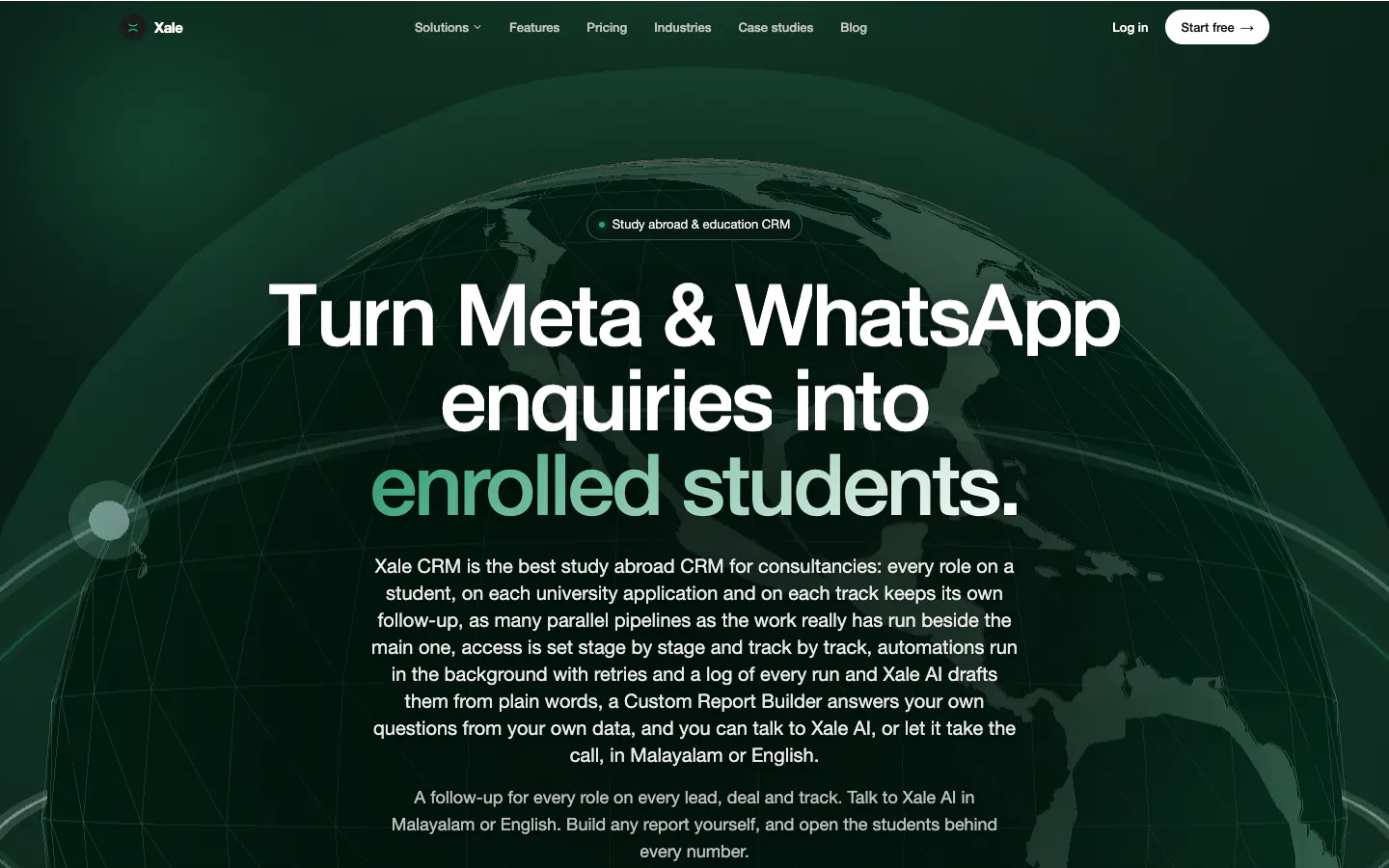
A disclosure: we market study abroad and college-guidance consultancies, including Skymark Education and Clarix Education, as part of our marketing for study abroad and admission consultancies, and the team behind Marketlube built Xale (opens in a new tab), a CRM for consultancies. So this is a playbook from inside that work. Every client figure carries a label saying who measured it.
Kerala is one of the busiest study abroad markets in the country. The state's student emigrants roughly doubled, from 1,29,763 in 2018 to about 2.5 lakh in 2023, and one in four went to the UK while one in five chose Canada, according to the Kerala Migration Survey 2023 (opens in a new tab) by GIFT and IIMAD. And over the last five years, of the Indian states where Google Trends had enough searches for "study abroad marketing" to report at all, Kerala had the highest share, by a distance. The national flow is large but no longer climbing: Bureau of Immigration figures given to the Rajya Sabha (opens in a new tab) on 20 March 2025 show 7,52,111 Indians declaring study as their purpose of travel in 2022, 8,94,783 in 2023 and 7,60,073 in 2024. A consultancy planning for 2027 is competing harder for a flatter market, which is why the plan below starts with where students now want to go.
Which destinations should your 2027 campaigns lead with?#
Start with what students search, then check what each country's rules now allow. Our read of Google Trends for Kerala, one phrase per country on one shared scale (yearly averages of the weekly index, read on 4 October 2026):
Index values are relative, not search counts. We stop at October 2025 because Trends shows a sudden jump across many unrelated phrases from November 2025 onwards, which looks like a change in Google's sampling rather than demand.
Three readings for a Kerala consultancy. By 2025, Germany was the most searched of the five here, and searches for "goethe", as in the Goethe-Institut's German exams, rose from 7.5 in 2022 to 24.2 in 2024 on the same kind of index. Canada has nearly vanished from these searches in Kerala. The UK is down by more than three quarters from 2022 but still large, and it leads Skymark's current ads.
The rules changed in the same years, and your ads must state each one as it stands today, with a date. What the official pages said on 4 October 2026:
One line shows why the dates matter. "Two years' post-study work in the UK" is true only for Graduate visa applications made by 31 December 2026. A student starting a one-year master's in September 2026 or January 2027 will apply after that, so for them it is 18 months, and an ad promising two years is out of date.
So re-weight the budget to where demand and visa reality meet, build a content bank for the destinations that are rising, and put a "last checked" date on every page and ad that states a rule.
How do you build a video engine students actually watch?#
Nobody picks a consultancy on a whim. A student and their parents can spend months deciding, much of it on Instagram and YouTube, watching reels about countries, courses, costs and visas long before they call anyone. Every consultancy in Kerala is in that feed, promising much the same things, so the one that answers the real questions best, and most often, wins the call.
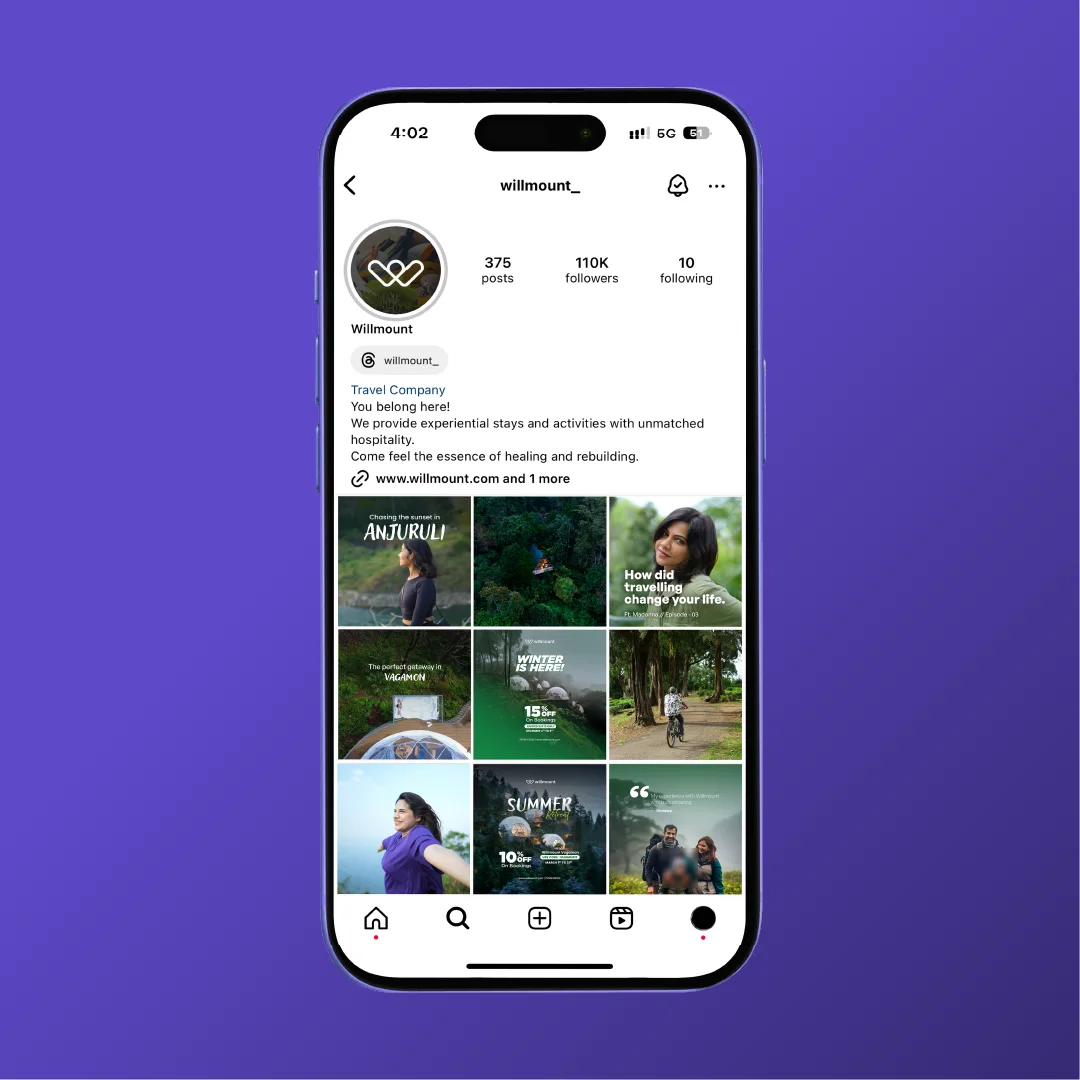
That is the engine we run for Skymark Education, a consultancy with six offices across Kerala. Our team reports more than 60 video creatives a month for it. Each answers one question, and the question goes on screen in the first second, in big type over the presenter: "Free education in Austria", "Physics, Chemistry, Maths", an intake that's open now. Presenters talk straight to camera, Malayalam first with course names in English, and the edit lands the answer fast. On 30 September 2026, Meta's public Ad Library listed 66 active ads from Skymark's page, 43 of them started that month. The UK came up most, then Ireland, with courses from nursing and teaching to law, healthcare management and hospitality, and scholarships and budget as the hooks that kept coming back. The Library shows Skymark's ads, not who made each one.
Build your own topic grid from the questions your counsellors hear every week:
Volume has a cost, so price it per video. One Kerala reference point: ReelsBuddy, the video production brand Marketlube runs, charges from ₹999 for a shoot-only package and from ₹1,999 for a full video (presenter, script, shoot and edit), ReelsBuddy's own prices.
How should Meta and Google ads work for a consultancy?#
Treat the two platforms as two jobs. Meta and Instagram reach students and parents before they search; Google catches them when they type a country, a course and a city.
On Meta, find one idea and feed it. In one admission season for Clarix Education, a Kerala college-guidance consultancy we market, one creative idea, "Build your career", run as eight ads, brought 742 of its 1,466 lead-form enquiries (Meta's count), 51% of the total, at ₹215 each against ₹262 across the ads that brought enquiries in. A few other lessons from that account apply directly to study abroad (costs on the same basis):
- Speak to parents separately. One of those eight ads, written for parents, brought 145 of the 742 at ₹185 each, below the average. Many Kerala parents work in the Gulf; time their ads to Gulf evenings.
- A place beats a label. A hook naming Infopark Kochi brought 106 enquiries at ₹210; ads that led with a course name brought 102 at ₹381. For study abroad, test a named city or university town the same way.
- Keep audiences broad. Narrow north and south regional splits brought 28 enquiries at ₹679 each. Let the creative do the targeting.
- Count chats apart from forms. Clarix's 152 messaging conversations (WhatsApp, Messenger or Instagram), at ₹117 each on the ads that started them, are reported separately from the forms, because a chat that opens is a lower-intent result.
Use Meta's higher-intent form type, which adds a step where the person reviews and confirms their answers before submitting, per Meta's lead ads documentation (opens in a new tab). Ask only what a counsellor needs for the first call: destination, course level, intake, current qualification and year, a parent's number for under-18s. Xale's guide to Meta instant form questions for study abroad leads (opens in a new tab) goes question by question, and our guide to click-to-WhatsApp ads covers the chat route. Once you have volume, send lead stages back from your CRM so Meta optimises for enquiries that turn into counselling sessions, not raw form fills; Meta's conversion leads guide (opens in a new tab) asks for at least 200 leads a month and uploads at least once a day.
On Google, buy the questions that mean business: a country and a course from a city, "study in Germany from Kerala", "nursing in Ireland for Indian students", plus your own brand name so a competitor's ad doesn't sit above it. Lead form assets (opens in a new tab) let people enquire inside a Search ad, but Google keeps those leads for only 60 days, so send them to your CRM by webhook rather than downloading them by hand.
Budget for the season, not the year. Costs can climb as decisions approach. In Clarix's account, lead-form ads launched in February cost ₹120 an enquiry and those launched in May ₹374, counting the ads that brought enquiries in, and a thousand impressions cost more than twice as much for the May launches as for February's. For a consultancy, plan for a similar squeeze before each intake's deadlines, and build audiences in the quiet months. Our cost per lead guide has two published Indian ranges for education leads on Meta: ₹150 to ₹400 and ₹200 to ₹600 (both 2025).
Do seminars, fairs and webinars still earn their cost?#
Yes, when video does two jobs around them. Skymark runs study abroad events it calls the Abroad Edu Conclave: a hotel ballroom full of students, universities at their own tables under their banners, speakers on stage. An event like that needs video twice: before, to fill the room, and after, to show the room to everyone who wasn't in it. We made both: a vertical promo for the 2024 edition, with the venue and the date, and a landscape film from inside a conclave.
Webinars are the low-cost version. In June 2026, two of Clarix's Shorts invited viewers to free webinars, one for students who had just finished Plus Two and one for anyone with doubts about a BCA. Run separate sessions for Gulf-based parents in their evening. Whatever the format, the only number that matters afterwards is how many registrations became counselling sessions.
How do reviews and search keep enquiries coming between campaigns?#
A family that sees your reel will check you before they call. Two things answer that check.
A Google Business Profile for every office, with honest reviews. On 30 September 2026, Skymark's six offices had 2,042 Google reviews between them, rated 4.6 to 4.9: years of Skymark's own work with students, not something any campaign can buy. Google's rules are strict here. Its Maps content policy (opens in a new tab) bars merchants from offering incentives for reviews and from trying to "discourage or prohibit negative reviews, or selectively solicit positive reviews from customers", and it names staff review quotas too. So no free mock test in exchange for a review, no review link sent only to students whose visas came through, and no asking students to name their counsellor. Ask every student who finished their journey with you, the same way, and reply to every review. And keep one profile per staffed office: Google's guidelines say "Do not create more than one page for each location of your business" (opens in a new tab).
Pages that answer destination questions. A page for each country, and for each course within it, with costs, intakes, entry requirements and a dated "last checked" line, keeps enquiries coming when ads are paused. Our guide to SEO for colleges and schools shows the page grid that took a new Kerala college guide to second place on Google for "best bca colleges in kerala" (our screenshot, 2 October 2026). Xale's own site uses the same pattern for consultancies buying software, with 26 city and country pages.
What should happen after someone enquires?#
Everything above only pays off if the enquiry gets a fast, organised reply. Every enquiry needs an owner, a stage and a dated next step, and a student applying to four universities needs four applications tracked under one record. Our team built a CRM for Skymark Education (reported by our team). Building it for a large consultancy gave us the research, the product thinking and the automation know-how that later helped us build a bigger product, Xale. Skymark moved onto Xale in March 2026, as xale.in's story of the move (opens in a new tab) tells it. Xale's guides on follow-up cadence for study abroad leads (opens in a new tab) and re-engaging old leads (opens in a new tab) cover the follow-up in depth, so we won't repeat them here.
What can a consultancy's ads promise?#
Less than many do. India has two rulebooks on advertising claims, and a third on manipulative design.
- ASCI's education guidelines (opens in a new tab) apply to "universities, colleges, schools, coaching classes, Edtech platforms etc.": no implied guarantee of admission, a job or a salary without substantiation, and then a "past record is no guarantee of future prospects" disclaimer in a font no smaller than the claim; no "100%" promises for abstract things; result claims only from the latest completed academic year. A consultancy's own ads still sit under ASCI's general code and the Consumer Protection Act, 2019.
- The CCPA's coaching guidelines (opens in a new tab) (13 November 2024) bar promises of "guaranteed selection, job security ... admission to any institution" and require a successful candidate's written consent, taken after their selection, before their name or photo appears. They apply to anyone engaged in coaching, tuition included (the fifty-student figure only defines a "coaching centre"), and exclude counselling, so they reach a consultancy's IELTS or language classes, whatever their size, rather than its counselling desk.
- The CCPA's dark patterns guidelines (opens in a new tab) (30 November 2023) list false urgency, such as stating that seats are more limited than they are, and drip pricing, where charges appear only at the end.
Trust badges need the same care. None of the common agent schemes is an Indian licence. The UK's Agent Quality Framework says plainly (opens in a new tab) that it "does not provide accreditation, licensing, or ongoing assurance"; ICEF Agency Status is an industry accreditation renewed every year; Australia lists trained counsellors on its QEAC list. What you can honestly claim is narrow: that your counsellors completed a named training, or that your agency holds a named status this year. The Australian government's own advice to students is blunt: "no agent can guarantee the outcome of your Student visa application" (Study Australia, 1 May 2026 (opens in a new tab)). And IRCC's guidance (opens in a new tab) says an agent who advises on a study permit must be an authorised immigration representative.
Regulation is tightening around agents too. In October 2024, the Kerala government set up a task force against illegal recruitment and visa fraud under NORKA's Operation Shubhayatra, and asked its Law Department to look at regulating agencies involved in student migration, as PTI reported (opens in a new tab) on 18 October 2024. Punjab already licenses consultancies that guide students going abroad, under its 2012 Act and 2014 rules (opens in a new tab). Marketing that would survive a licence inspection is the safe default. For your own claims, ask a lawyer.
How should a consultancy budget and measure?#
Budget per destination and intake, not per month. As a planning range, most consultancies start between ₹60,000 and ₹1.5 lakh a month in media for two or three destination countries (the range on our page for study abroad consultancies, before any agency fee). Hold back a share for the weeks before each deadline and a share for testing new creatives.
Then measure what pays the bills. Cost per lead tells you where to look; cost per counselling session, per file opened and per enrolment tell you what worked. Xale's piece on cost per lead versus cost per enrolment (opens in a new tab) sets out the arithmetic, and our education marketing calendar for 2027 maps which months to spend in. For how this looks across our education clients, see our education marketing case studies.
Frequently asked questions#
How much should a study abroad consultancy spend on ads?#
There is no standard figure. As a planning range, many consultancies start between ₹60,000 and ₹1.5 lakh a month in media for two or three destinations. Two published Indian ranges put education leads on Meta at ₹150 to ₹400 and ₹200 to ₹600 (2025), and costs rise in the weeks before application deadlines.
How early should a consultancy start marketing for the September 2027 intake?#
Six to nine months before it. For UK undergraduate courses starting in 2027, UCAS's equal consideration date is 13 January 2027 for most courses and was 15 October 2026 for Oxford, Cambridge and most medicine courses; in Germany, winter-semester deadlines are often 15 July. Build audiences in the quiet months, because enquiries get dearer close to deadlines.
Do study abroad consultancies need a licence in Kerala?#
We found no Kerala law that licenses study abroad consultancies as of 4 October 2026. Punjab does, under its 2012 Act and 2014 rules. India's draft Overseas Mobility (Facilitation and Welfare) Bill, 2025, published for comment on 9 October 2025, deals with overseas employment and does not mention students. Advertising rules apply everywhere: the Consumer Protection Act, ASCI's code and, for coaching arms, the CCPA's coaching guidelines.
Is Meta or Google better for a study abroad consultancy?#
Both, for different jobs. Meta and Instagram reach students and parents with video before they search; Google Search catches high-intent searches such as a country and a course. In our consultancy work, most of the media goes to Meta, because video does the selling, with Google kept for brand and course searches.
Plan the 2027 intakes now#
The consultancies that fill their 2027 intakes will have chosen their destinations, built their video bank and set up their follow-up before the expensive weeks begin. If you want help with yours, tell us about your consultancy.
Changelog#
- 2026-10-09: Skymark's CRM history as the founder confirmed it on 8 Oct 2026; the ad-spend range now points to our page for study abroad consultancies, where it moved; the closing note no longer gives a count of our education clients, since it changes as case studies are added; the coaching guidelines' reach corrected: they apply to anyone engaged in coaching, not only to centres with more than fifty students.
- 2026-10-13: Skymark's CRM history is now told in the founder's wording of 13 October 2026: our team built a CRM for Skymark (reported by our team), building it for a large consultancy gave us the research, the product thinking and the automation know-how that later helped us build Xale, and Skymark moved onto Xale in March 2026, as xale.in's page on Skymark tells it. Links to xale.in's study abroad page and its page on Skymark were added on 12 October 2026. No figure or step changed.
Related services
Industries
Written by
Co-founder, Marketlube
Althameem Ali researched, edited and approved this post. Marketlube is a growth partner in Calicut building brands, websites, CRMs and campaigns for businesses across Kerala, India and the Gulf.