Rebrand or refresh? Seven signs your brand has outgrown its identity, a self-scoring checklist, lessons from famous rebrands and 2026 cost ranges for India.
- Published
- Reading time
- 11 minutes
Drafted with AI tools; researched, edited and approved by Fidal P. Our editorial policy
On this page · 18 sections
- What is the difference between a rebrand and a refresh?
- What are the 7 signs your brand has outgrown it?
- 1. You've moved upmarket, but you still look like the budget option
- 2. Your name describes a business you no longer are
- 3. You're entering the Gulf, and the brand doesn't travel
- 4. Every touchpoint looks different
- 5. The logo breaks on a phone screen
- 6. You blend into your category
- 7. Something structural or legal has changed
- How do you score your own brand?
- What can go wrong? Lessons from well-known rebrands
- Tropicana: a refresh that deleted the cues shoppers used
- Gap: a new logo with no reason behind it
- Mastercard: an evolution that kept what people knew
- What does a rebrand or refresh cost, and how long does it take?
- How do you roll out a new brand without losing customers?
- Frequently asked questions
- Start with the diagnosis
Most rebrands start with a feeling: the logo looks tired, a competitor has launched something slicker, or a new partner thinks the colours are wrong. A feeling is a poor reason to throw away years of recognition, but it is a good reason to take a hard look at your brand identity. Sometimes the fix is a few weeks of tidying up. Sometimes the business really has outgrown its brand, and polishing the logo would only hide the problem.
This guide gives you seven signs to check, a simple way to score them, and what well-known rebrands teach about getting it wrong. It is written for owners in Kerala, across India and in the Gulf who are deciding how much to change. Cost and timeline figures are typical planning ranges for 2026, not quotes.
What is the difference between a rebrand and a refresh?#
A refresh changes how the brand looks and is applied. A rebrand changes what the brand stands for, and usually its name, logo and story along with it.
Typical ranges; printing, signage and GST are extra. Confirm with quotes.
Plenty of good projects sit between the two. An evolution keeps the name and the recognisable idea, but redraws the mark and rebuilds the system around it. For many established Kerala businesses, that is the sweet spot.
What are the 7 signs your brand has outgrown it?#
Some of these signs are about execution and point to a refresh. Others are about strategy, and no amount of polish will fix them.
1. You've moved upmarket, but you still look like the budget option#
Picture a bakery that started with ₹20 puffs and now runs a café serving plated desserts at ten times the price, still behind the original signboard. Customers judge the price before they read the menu. If your prices, service or product quality have climbed and your brand hasn't, you are either losing premium buyers at first glance or attracting people who then balk at the bill.
Usually needs: a rebrand, or a strategy-led refresh if the name still works.
2. Your name describes a business you no longer are#
A shop whose name ends in "Mobiles" now sells laptops and appliances across six branches. A textile house now earns most of its revenue from wedding wear. When the name describes the past, every new customer starts with the wrong picture.
Usually needs: a rebrand, or brand architecture work: a new parent name, a descriptor, or sub-brands for each line.
3. You're entering the Gulf, and the brand doesn't travel#
A name that works in Malayalam may be hard to pronounce, or carry an unintended meaning, in Arabic. A Gulf launch also needs an Arabic logotype designed to sit alongside the English one, not a translation typed in a default font. And packaging has to carry Arabic label information, which our guide to packaging for Kerala brands going to the Gulf covers.
Usually needs: a bilingual extension of the identity. A full rebrand only if the name itself fails.
4. Every touchpoint looks different#
The signboard shows one version of the logo, Instagram another, the delivery bag a third, and staff make posters with whatever fonts are on hand. Each inconsistency is small, but together they make a business look smaller and less organised than it is.
Usually needs: a refresh, with guidelines and ready-made templates so the problem doesn't return.
5. The logo breaks on a phone screen#
Fine lines, small text and a tagline inside the logo looked fine on a letterhead. On a WhatsApp profile picture cropped into a circle, an app icon, a browser tab or an embroidered uniform, they turn to mush. Most customers now meet your logo at the size of a fingernail.
Usually needs: a refresh, with a responsive logo set: a full version, a compact version and a simple icon.
6. You blend into your category#
Many jewellers use gold and maroon. Many clinics use teal and a medical cross. Many developers show a skyline at sunset. Cover the name on your ad: if it could belong to any competitor, some of the recognition you pay for goes to them.
Usually needs: a refresh if your name and reputation are strong; a rebrand if your positioning is as generic as your visuals.
7. Something structural or legal has changed#
A merger, a new owner, a family business splitting in two, a trade mark conflict, or a name that customers keep confusing with a competitor's. Sometimes the trigger comes from outside: in January 2021, Myntra changed its logo after a police complaint in Mumbai argued it was offensive.
Usually needs: a rebrand, sometimes on a deadline you didn't choose.
How do you score your own brand?#
Go through the seven signs honestly, ideally with two or three people who don't all think alike, then use the type column to decide where to start.
- No signs, or one execution sign: keep the brand and fix templates.
- Only execution signs: a refresh will solve it.
- Any strategy sign: start with strategy. The design scope follows from the decisions you make there.
A quick reality check helps too. Ask five customers to describe your business in three words, and ask your staff the same. If the answers match each other and match where you want to go, you probably need a refresh at most.
What can go wrong? Lessons from well-known rebrands#
The most useful before-and-after examples are the ones that went wrong, because the lessons are clearer.
Tropicana: a refresh that deleted the cues shoppers used#
In early 2009, Tropicana replaced its orange-with-a-straw carton with a minimalist glass of juice. Ad Age reported that sales of the line fell 20% after the rebranding (opens in a new tab), and the company brought back the old design. Shoppers find a product by shape, colour and symbol long before they read the name. Before you change packaging, list the cues customers use to spot you on a shelf, and keep most of them.
Gap: a new logo with no reason behind it#
In October 2010, Gap swapped its familiar blue-box logo for a plain wordmark with a small blue square. After a fierce online reaction it reverted within a week, telling customers on Facebook, as HuffPost reported (opens in a new tab), "We've heard loud and clear that you don't like the new logo." A new identity needs a reason customers can understand: a change in the business, not a change in taste.
Mastercard: an evolution that kept what people knew#
Mastercard's 2016 identity, designed by Pentagram, simplified the overlapping red and yellow circles instead of replacing them. Pentagram reports (opens in a new tab) that in Mastercard's research, 81% of consumers recognised the new symbol without the brand name. Mastercard later began using the symbol on its own. When recognition is your biggest asset, refresh around it.
The pattern is consistent: the failures changed the cues people relied on without a business reason, and the success kept the cue and cleared away the clutter.
What does a rebrand or refresh cost, and how long does it take?#
Typical planning ranges; confirm with quotes.
The rollout line is the one owners underestimate. A café needs a new signboard, menus and cups; a manufacturer may have forty packaging variants, a fleet and trade-show stands. Our guide to branding costs in India breaks down what each price band should include.
Budget for legal protection too. In India, the official fee for filing a trade mark application online is ₹4,500 per class for individuals, start-ups and small enterprises, and ₹9,000 per class for others (opens in a new tab), before any attorney's fees. Gulf markets need separate registrations.
How do you roll out a new brand without losing customers?#
- Audit every touchpoint first. Signage, packaging, vehicles, uniforms, invoices, website, social profiles, your WhatsApp Business profile, Google Business Profile, directory listings and email signatures. The audit sets the rollout budget.
- Clear the name and mark before launch. Run trade mark searches and file early. Changing a name after the signboard is up costs far more.
- Choose phased or overnight. Digital channels and signage usually switch together on a launch date; packaging is often phased in as old stock runs down.
- Tell customers why. A short, honest story about what changed in the business. If you changed the name, show "formerly" and the old name next to the new one for a few months.
- Protect your search visibility. If your domain changes, redirect every old URL to its new equivalent with 301 redirects, following Google's guidance on site moves (opens in a new tab). Update your Google Business Profile once the new signage is up, so the name matches what customers see.
- Brief staff and partners before the public. The people answering the phone need to use the new name from day one.
- Measure what happens. Watch branded searches, direct website visits and enquiry volume for three to six months after launch.
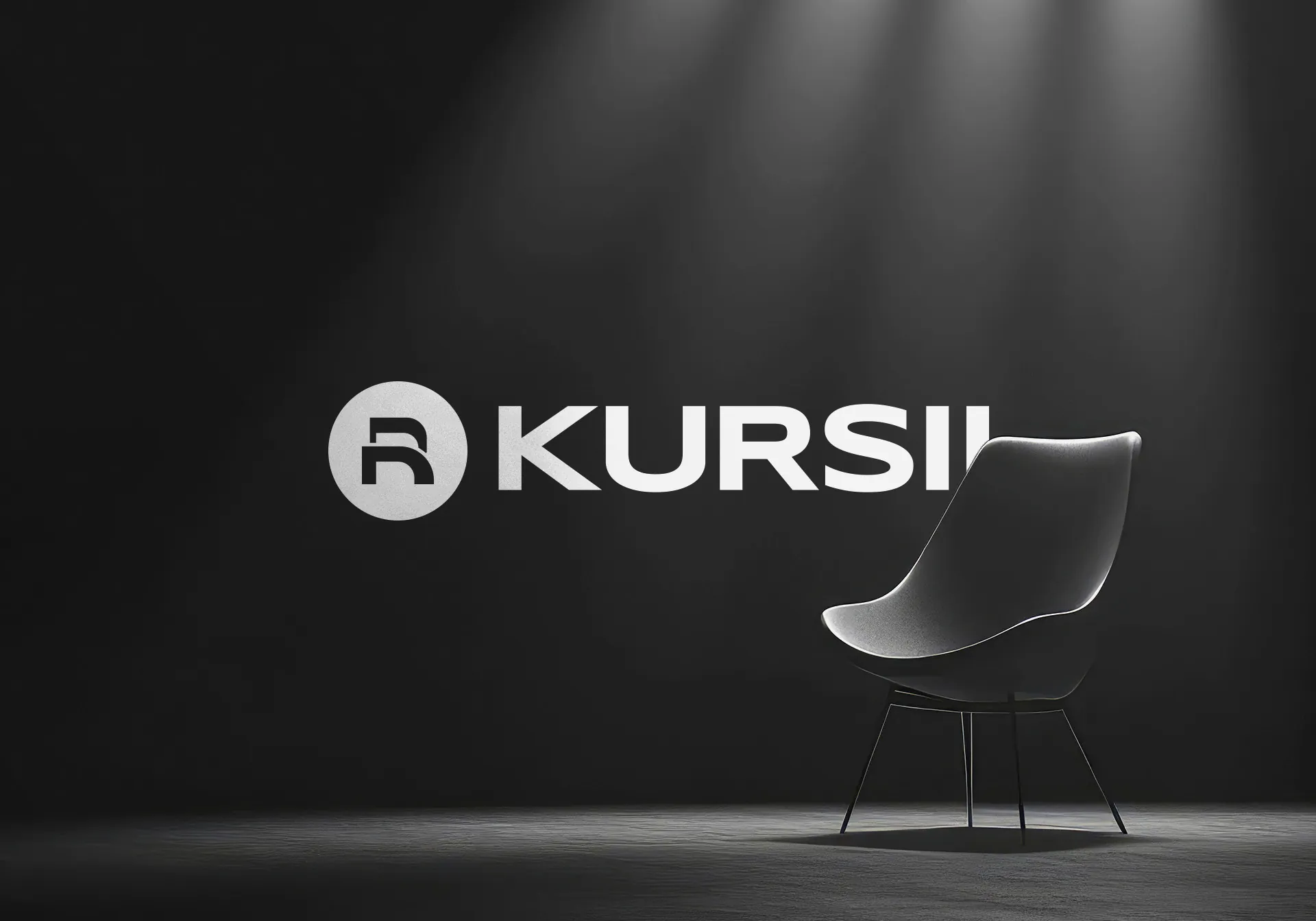
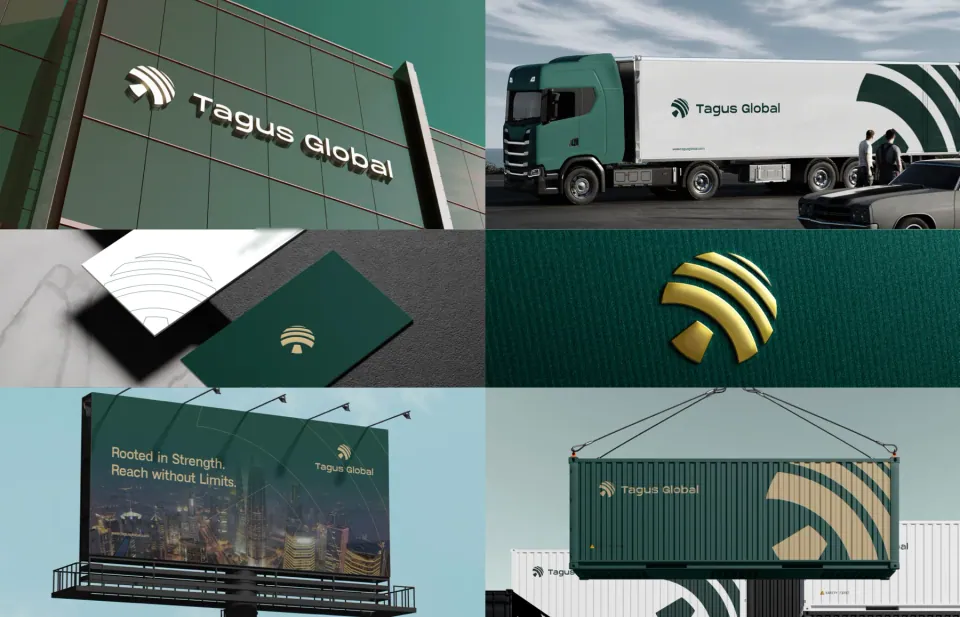
For a sense of how far a complete system reaches, our Kursii seating brand identity carried one monogram into billboard, fleet and stationery mockups.
Frequently asked questions#
How often should a business refresh its brand?#
There is no fixed cycle. Review your identity every few years, or whenever one of the seven signs appears. Strong brands tend to evolve in small steps rather than leap, which keeps the recognition they have already paid for.
Will a rebrand hurt our Google rankings?#
A visual refresh won't. A name or domain change can cause a temporary dip if redirects are missing or wrong, so map every old URL to a new one, keep the old name mentioned on your site for a while, and update your business listings consistently.
Can we keep our logo and change everything else?#
Yes, and it is one of the most common refreshes. Keeping the symbol while updating typography, colours, photography and templates can make a business look current without asking customers to relearn anything.
Should we ask customers which new logo they prefer?#
Ask them how they describe you and what they would miss if it changed, not which logo they like. Customers are good at telling you what they value and poor at judging an identity from a single image.
How long does a rebrand take?#
As a planning guide, a refresh takes three to six weeks, a complete identity six to ten weeks, and a strategy-led rebrand three to six months, with rollout on top. Decision speed on your side is usually the biggest variable.
Start with the diagnosis#
Score your brand against the seven signs before you brief anyone. If they point to a refresh, you'll save money and keep your recognition. If they point to a rebrand, you'll go in knowing why. If you'd like a second opinion, tell us what's changed in your business and we'll say honestly which one you need. You can also see how we approach brand strategy and identity.
Related services
Industries
Written by
Co-founder, Marketlube
Fidal P researched, edited and approved this post. Marketlube is a growth partner in Calicut building brands, websites, CRMs and campaigns for businesses across Kerala, India and the Gulf.